
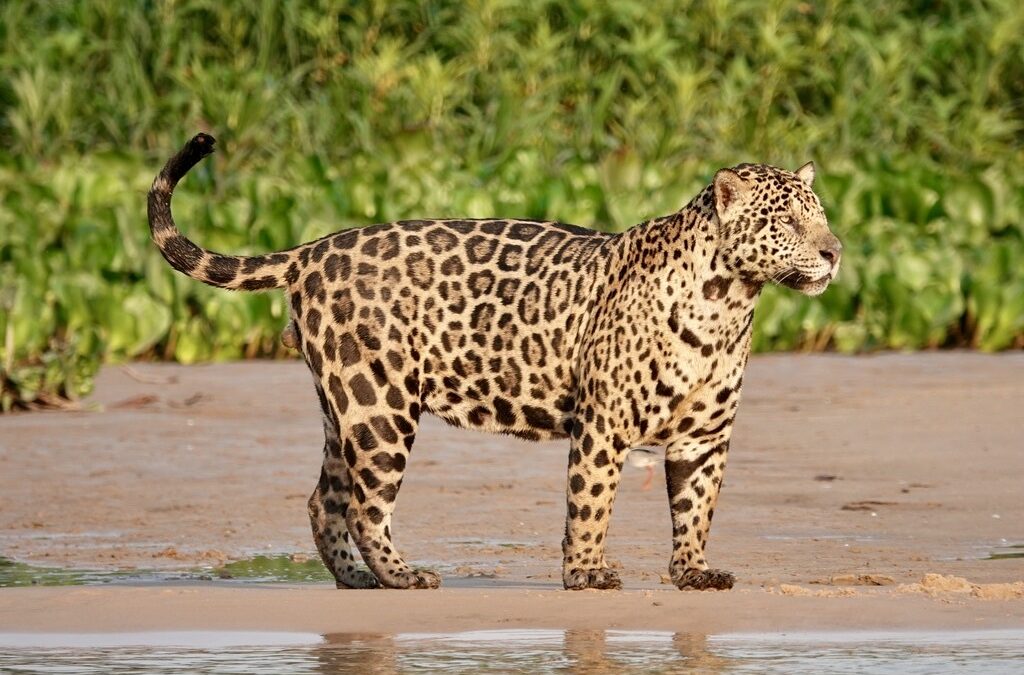
Every year on November 29th, Costa Rica celebrates Jaguar Day, a moment to honor one of the most powerful and mysterious animals in the Americas — the jaguar (Panthera onca). More than a symbol of strength and beauty, the jaguar is a keystone species, essential to the health and balance of tropical ecosystems.
In Costa Rica, protecting the jaguar means protecting entire forests, watersheds, and wildlife corridors that countless species depend on.
The Jaguar: Guardian of the Forest
As the largest feline in the Americas, the jaguar sits at the top of the food chain. Its presence helps regulate prey populations, maintain biodiversity, and ensure ecosystem stability. When jaguars thrive, forests thrive.
For centuries, Indigenous cultures across Central America have revered the jaguar as a guardian, protector, and spiritual guide, symbolizing harmony between humans and nature.
Where Jaguars Live in Costa Rica
Although elusive and rarely seen, jaguars still roam some of Costa Rica’s most important protected areas, including:
-
Corcovado National Park
-
Tortuguero National Park
-
Barra del Colorado Wildlife Refuge
-
La Amistad International Park
-
Santa Rosa National Park and the Guanacaste Conservation Area
These regions are critical not only as habitats but also as biological corridors that allow jaguars to move, hunt, and reproduce safely.
A Special Moment in Armonía
This Jaguar Day holds special meaning for us. Our trapcams in Armonía captured an extraordinary sight — a jaguar and her cub.
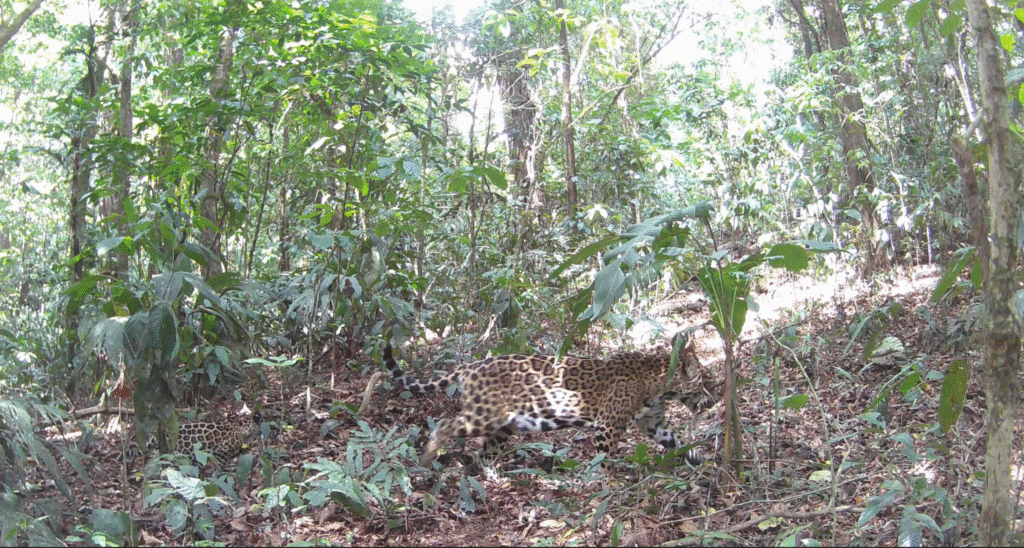
Moments like these are rare and deeply moving. They remind us why conservation matters and why preserving intact habitats is essential for the survival of future generations of wildlife. Seeing a mother and cub confirms that the ecosystem is healthy enough to support reproduction — a hopeful sign for the species.
The Threats Jaguars Face
Despite their strength, jaguars are vulnerable. Habitat loss, deforestation, illegal hunting, and human-wildlife conflict continue to threaten their survival across the region.
Protecting jaguars requires long-term commitment, education, and collaboration between conservation organizations, local communities, and responsible tourism operators.
How Responsible Tourism Helps
Sustainable tourism plays a vital role in jaguar conservation by:
-
Supporting protected areas and wildlife monitoring
-
Promoting habitat preservation and corridor protection
-
Providing economic alternatives for local communities
-
Raising awareness about the importance of biodiversity
Choosing ethical, conservation-driven travel experiences helps ensure that wildlife remains wild — and protected. By respecting nature, supporting conservation efforts, and traveling responsibly, we can help ensure that the jaguar continues to roam Costa Rica’s forests — not just as a symbol, but as a living presence.